Choosing the Right Generators for Your Business Needs
- lawnandlandscapeso
- Nov 6, 2025
- 4 min read
Power outages can disrupt operations, cause financial losses, and damage your reputation. For businesses that rely on continuous power, selecting the right generator is essential. This guide helps you understand how to choose a generator that fits your business’s specific needs, ensuring reliable backup power when it matters most.
Understand Your Power Requirements
Before shopping for a generator, you need a clear picture of your power needs. Generators come in various sizes and capacities, so knowing how much power your business uses is critical.
Calculate total wattage
List all the equipment and systems that need backup power. Include lighting, computers, HVAC, refrigeration, security systems, and any specialized machinery. Check the wattage ratings on devices or consult manuals.
Identify essential vs. non-essential loads
Prioritize which equipment must stay on during an outage. For example, a grocery store may prioritize refrigeration and lighting but can turn off non-critical appliances.
Consider starting watts
Some equipment requires extra power to start, such as motors or compressors. Make sure your generator can handle these surge demands.
Plan for future growth
If you expect to add equipment or expand your business, factor in extra capacity to avoid upgrading your generator too soon.
Choose the Right Type of Generator
Generators fall into several categories based on fuel type, size, and portability. Each has advantages and drawbacks depending on your business’s needs.
Portable Generators
Best for small businesses or temporary power needs
Typically run on gasoline or propane
Easy to move and store
Limited power output (usually up to 7,500 watts)
Require manual setup and refueling
Portable generators work well for small shops, food trucks, or construction sites where power needs are modest and mobility is important.
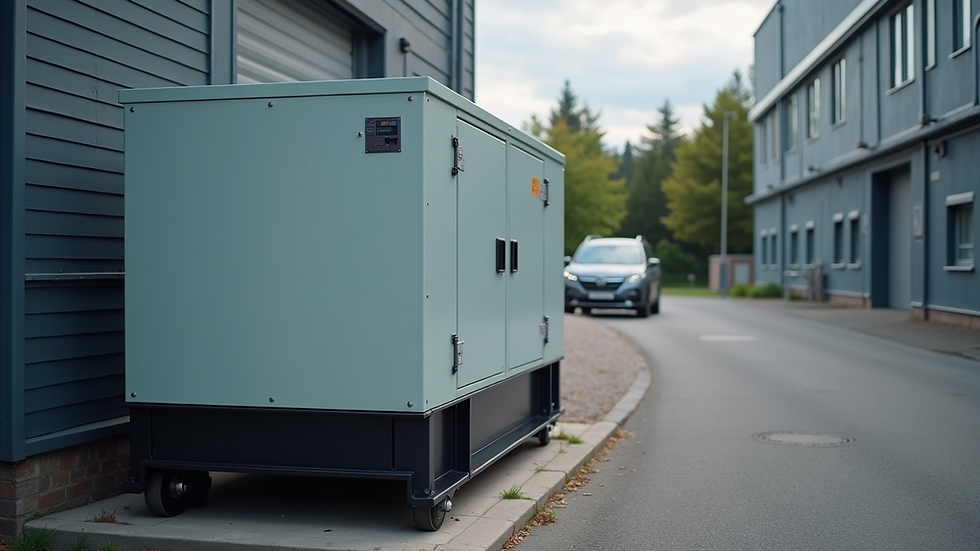
Standby Generators
Designed for automatic backup power
Permanently installed outside the building
Run on natural gas or propane
Automatically start when power goes out
Can power entire buildings or selected circuits
Require professional installation and maintenance
Standby generators suit businesses that cannot afford downtime, such as medical offices, data centers, or retail stores.
Industrial Generators
High-capacity units for large facilities
Often diesel-powered
Provide power for extended outages
Require significant space and professional handling
Used in manufacturing plants, warehouses, and large commercial buildings
Industrial generators are ideal for businesses with heavy power demands and critical operations.
Consider Fuel Availability and Storage
Fuel type affects generator operation, cost, and convenience.
Gasoline
Easy to find but has a short shelf life and requires safe storage. Portable generators often use gasoline.
Propane
Cleaner burning and longer shelf life than gasoline. Propane tanks can be stored safely outside.
Natural Gas
Continuous supply through pipelines, ideal for standby generators. No need to refill tanks.
Diesel
Common for industrial generators. Diesel fuel is energy-dense but requires proper storage and handling.
Choose a fuel type that matches your location, budget, and maintenance capabilities.
Evaluate Noise Levels and Environmental Impact
Generators can be noisy and produce emissions. Consider these factors to avoid disturbing neighbors or violating regulations.
Noise ratings
Check decibel levels. Quieter models are better for urban or residential areas.
Emission standards
Look for generators that meet local environmental regulations.
Enclosures and mufflers
These can reduce noise and protect the generator from weather.
Assess Installation and Maintenance Needs
Proper installation and regular maintenance keep your generator reliable.
Professional installation
Especially important for standby and industrial generators to ensure safety and compliance.
Routine maintenance
Includes oil changes, filter replacements, and testing. Some manufacturers offer maintenance plans.
Accessibility
Place the generator where it’s easy to service but safe from flooding or damage.
Calculate Total Cost of Ownership
The initial purchase price is only part of the cost. Consider:
Installation fees
Fuel costs
Maintenance and repairs
Expected lifespan
Warranty and support
A cheaper generator may cost more over time if it uses expensive fuel or requires frequent repairs.
Match Generator Features to Business Needs
Look for features that improve usability and safety.
Automatic transfer switch
Automatically switches power to the generator during an outage.
Remote monitoring
Allows you to check generator status from anywhere.
Multiple outlets and power options
To connect various equipment safely.
Safety features
Such as overload protection and low-oil shutdown.
Real-World Examples
A small café uses a portable propane generator to keep refrigerators and lights running during short outages. The portability allows them to move it indoors if needed.
A dental clinic installs a standby natural gas generator with an automatic transfer switch. This setup powers critical equipment without interruption, protecting patient safety.
A manufacturing plant invests in a diesel industrial generator with remote monitoring. It supports heavy machinery and alerts staff to any issues immediately.
Final Thoughts
Choosing the right generator means balancing power needs, fuel options, noise, cost, and maintenance. Start by understanding your essential loads and future plans. Then select a generator type and features that fit your business size and environment. Investing in the right generator protects your operations and keeps your business running smoothly during power interruptions.
Take the next step by consulting with a generator specialist who can assess your specific needs and recommend the best solution. Reliable backup power is a smart investment that pays off in peace of mind and uninterrupted productivity.


Comments